

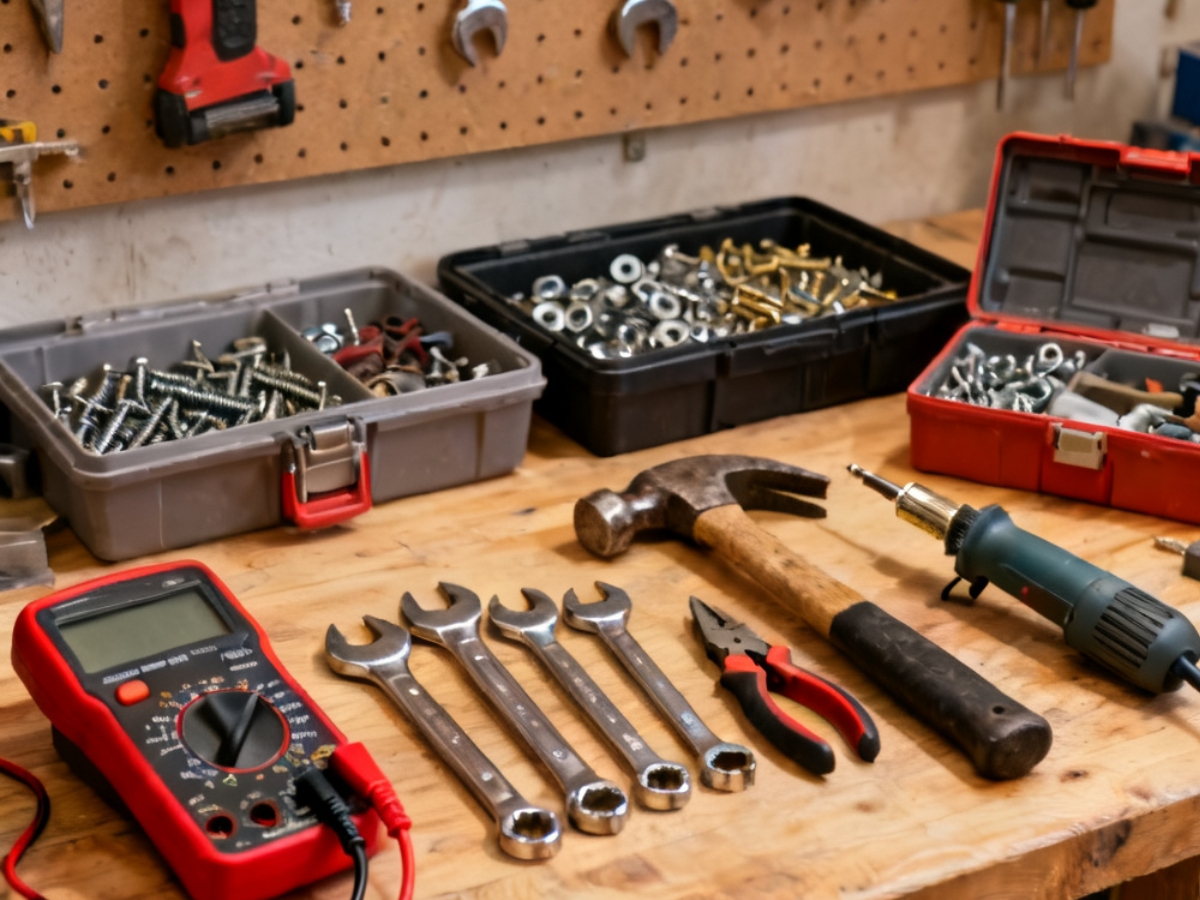

Tools have come a long way from the old hammer-and-nail days. The world of industrial tools and equipment is changing in ways that can actually make your life easier. And if you haven’t had a look at what is out there lately, you might be surprised at just how far things have come.
At Norva Tools, we live and breathe this stuff. So grab a coffee and let us walk you through what is happening right now in the world of trade tools, and why it matters to you.
Key Trends Shaping Industrial Tools and Equipment
Here is the thing about modern trade tools – they are not just getting better, they are getting smarter, tougher, and more practical for everyday use. Whether you are a professional on a big commercial build or a local tradie keeping the neighbourhood in good shape, it would help you to know that the tools available today are genuinely smart.
Across Australia, demand for quality trade tools is booming. Construction is going strong, home renovations are through the roof (literally), and more people than ever are investing in proper gear instead of making do with cheap hardware store specials. The shift is real, and it is being driven by a few big trends that are worth knowing about.
There are smart batteries, tools that talk to your phone, equipment that practically tells you when it needs a service, and manufacturing practices that are actually better for the environment. These aren’t just industry buzzwords – they are real changes that are making it onto job sites and into garages all across the country.
Emerging Technologies in Industrial Tools
Remember when “high-tech” meant a cordless drill? Those days are well behind us.
Today, tools are borrowing technology from industries you might not expect. Augmented reality – the same kind of thing you see in smartphone games – is being used by technicians to overlay repair instructions directly onto the equipment they are working on. Laser measuring tools have become so accurate and affordable that nowadays even small builders have one in their kit. And AI-assisted diagnostic tools can pick up a problem in a machine before it becomes a breakdown that costs you half a day’s work.
3D printing is also making an appearance, particularly for custom jigs and hard-to-find replacement parts. If you have ever been stuck waiting weeks for a specialised component, you will appreciate just how handy that can be.
The exciting part? A lot of these technologies that started in big industrial settings are now trickling down into the everyday tools for trade that regular Australians use. What was once reserved for major manufacturers is now landing in workshops and utes across the country – and their pricing is becoming genuinely accessible.
Growth of Smart and Connected Tools in Industry
Smart tools are one of the hottest things in the industry right now, and once you understand what they can do, it is easy to see why. Picture a torque wrench that records every single fastening it makes and saves the data to an app on your phone. Or a power tool that monitors its own temperature, tracks how many hours it has been run, and sends you a reminder when it is time for a service. These tools already exist – and they are not just for big corporations with deep pockets.
For anyone managing a van full of gear, running a small crew, or working in environments where safety compliance matters, smart tools are a genuine game changer. They reduce guesswork, keep you on top of maintenance, and can even help you prove to a client that the job was done to his/her satisfaction.
In the trade tools market in Melbourne, we are seeing strong uptake among commercial builders and contractors. The word is spreading fast to smaller operators too, as the prices of these smart trade tools come down and the benefits become harder to ignore. If you haven’t looked at smart tools yet, it might be time to take a closer look.
Adoption of Automation in Tools and Equipment
Now, before anyone panics – automation in tools doesn’t mean robots are taking over the job site. What it actually means is that smart tools handle the repetitive, tedious tasks so skilled people can focus on the work that actually requires their expertise.
Think automated pipe-threading machines that take the grunt work out of a repetitive task. Or tools that guide an operator step-by-step through a complex procedure, reducing the chance of a costly mistake. This kind of technology reduces fatigue, improves consistency, and makes it easier to bring new workers up to speed quickly.
For businesses thinking about their tools for trade investment, this is worth paying attention to. Tools that can plug into an automated workflow or that collect useful data as they operate are becoming a bigger part of purchasing decisions. It is not just about “does it cut straight?” anymore. It’s about “does it help my whole operation run better?”
Battery and Cordless Tool Advancements
If there’s one area that has genuinely blown people’s minds over the past few years, it’s battery technology. And it keeps getting better.
Today’s lithium-ion batteries are powering tools that once had to be plugged into the wall – heavy-duty angle grinders, demolition hammers, even concrete saws. High-capacity 10–12Ah battery packs are delivering run times that would have seemed impossible not long ago. And smart chargers that communicate directly with the battery can have you back up and running in under half an hour.
For anyone who has ever lost time on a job because of a flat battery or a missing extension cord, this is genuinely good news. Cordless tools for trade have become serious, professional-grade equipment – not just a convenient alternative for light work.
And there is even better stuff on the horizon. Solid-state batteries – a next-generation technology that promises more power, faster charging, and improved safety – are getting closer to commercial reality. When they arrive, it will be another big leap forward for anyone who works with tools every day.
At Norva Tools, our range of trade tools Melbourne tradies and home improvers rely on includes the very best cordless platforms from leading manufacturers. We know that battery performance can make or break a day’s work, which is why we only stock the good stuff.
Use of IoT in Industrial Equipment
IoT – or the Internet of Things – sounds a bit technical, but the basic idea is simple: your tools and equipment can now talk to each other, and to you, through the Internet.
Sensors built into tools and machinery can send real-time data about how the equipment is running, where it’s located, and whether anything looks like it might be heading for a problem.
For business owners, this is incredibly useful. Instead of finding out a tool has failed when you are in the middle of a job, you get a heads-up beforehand. Instead of wondering where a piece of equipment ended up, you can see it on a map.
On larger industrial sites, IoT is also playing a big role in safety – connected equipment can automatically shut down if it detects an unsafe condition, and wearable sensors can monitor worker fatigue and environmental hazards.
This technology is increasingly relevant – not just for big operations, but for anyone running a business where equipment reliability really matters. As the cost of IoT-enabled tools continues to drop, they are becoming a very practical investment.
Sustainability Trends in Tool Manufacturing Australians genuinely care about the environment – and it’s good to see the tools industry in Australia catching up. More manufacturers are now using recycled materials in their products, designing tools that are easier to disassemble and recycle at the end of their life, and running battery take-back programmes so that used lithium-ion packs don’t end up in landfill.
Some are also shifting to renewable energy and rethinking their supply chains to reduce transport emissions. For everyday Australians, buying tools for trade or home use, this matters. When you buy a quality tool built to last – rather than a cheap one you may replace in a year – you are already making a more sustainable choice. And when that tool comes from a manufacturer who is thinking carefully about its environmental footprint, that is even better.
At Norva Tools, we only stock genuine, quality products from manufacturers who take sustainability seriously. Because looking after the planet and getting the job done perfectly can go hand in hand.
Wrapping Up
The tools industry is innovating at a rapid pace, and Australian tradies and home improvers are reaping its rewards. Smarter batteries. Connected tools. Sustainable manufacturing. Better performance at every price point. These aren’t trends confined to big industries anymore – they are landing right here, in small workshops and on unknown job sites across the country.
Norva Tools is your local partner for all of these. We supply new and genuine trade tools to professionals and home improvers all across Australia, with a strong presence as the go-to source for trade tools Melbourne customers trust.
Whether you need tools for trade, weekend projects, or guidance on which industrial tools to buy next, we are here to help. As one of Australia's top professional tool retailers, we offer trade tools that Melbourne residents and businesses have trusted for years. Browse this website or give us a call. We love talking tools.
FAQs
What are the happening trends in industrial tools and equipment? S
Some of the trends in the world of industrial tools and equipment are connected tools, automation-ready equipment, and cordless technology. Also gaining prominence are durable materials, modular designs, and energy-efficient systems, which are enabling industries to improve productivity and reduce downtime and operating costs.
How are smart tools changing industrial work?
Smart or rather intelligent tools are now tracking performance and maintenance needs by using sensors and real-time data. This is drastically reducing the room for manual errors and support predictive maintenance.
What role does automation play in modern tools?
Automation enables in the lowering reliance on manual labour. It also improves consistency, and can boost productivity.
Are cordless tools replacing corded tools in the industry?
They are. Advances in lithium-ion batteries mean cordless tools now offer comparable power while increasing mobility, making them ideal for construction and remote work sites across Australia.
How is IoT used in industrial equipment?
Tracking performance and enabling predictive maintenance are examples of IoT applications. This can help industries reduce downtime, improve workplace safety, and make real-time data-driven decisions.
What are the benefits of using advanced industrial tools?
Precision, productivity and safety in the workplace can be increased through the application of advanced industrial tools, as well as lowering the long-term costs of production. Moreover, equipment longevity and reduced downtime in the production process can also be achieved through the application of advanced industrial tools.
How are tools becoming more energy-efficient?
In the new-age tools more efficient motors, improved power management, and advanced batteries are being used, which is contributing to reduced energy consumption. This, in turn, is helping businesses to reduce operating costs and be more sustainable in their operations. What safety improvements are seen in modern tools? We can see there are modern tools being spruced with sensors, automatic shut-offs, and real-time monitoring to prevent accidents.
How does AI impact industrial tools and equipment?
Through AI, one can perform predictive maintenance, optimise processes, and make real-time decisions. It helps detect faults early and improves production efficiency.


USEFUL LINKS
Automotive Toolschevron_right
Hand Toolschevron_right
Cordless Toolschevron_right
Diagnostic Toolschevron_right
Outdoor Toolschevron_right
Airtoolschevron_right
Clearancechevron_right
Featuredchevron_right
Tool Kitschevron_right
Brandschevron_right
Workshop Toolschevron_right
The information below is required for social login
Sign In
Create New Account